
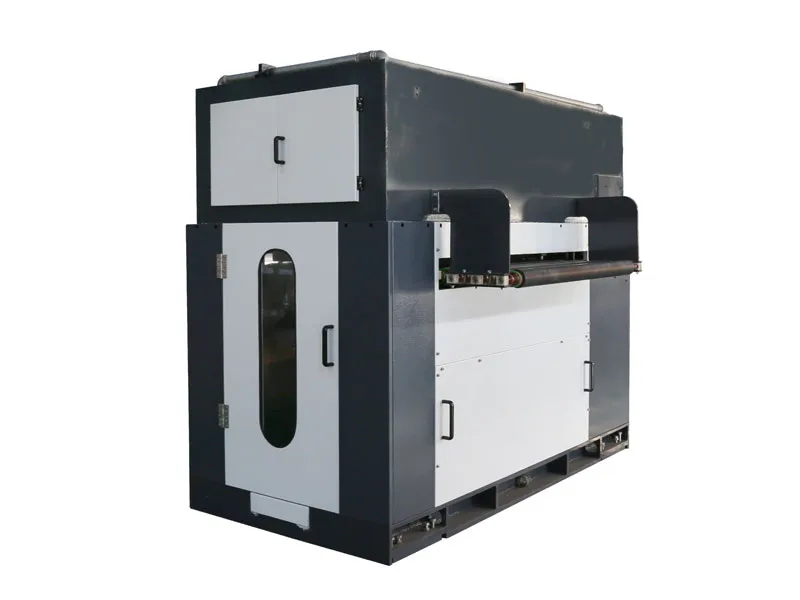
A No.4 buffing machine is the stage that gives a No.4 grain its sheen. It does not create the grain — that is done upstream by the grinding head — it works the surface with compound to lift gloss without cutting the pattern that is already there.
That distinction matters more than it sounds. Buyers regularly arrive asking for a buffing machine to fix a surface that is actually under-ground, and no amount of compound will recover it. The check is simple: look at the sheet under raking light before buffing. If the grain is uneven or the scratch pattern is still visible, the problem is upstream and buffing will only make it glossier and more obviously wrong.
Where it sits in the No.4 sequence
A No.4 finish is produced in two stages, and the buffing head is the second one.
- Grinding establishes the short, non-directional grain at roughly Ra 1.0–1.5 μm. Grit typically runs #120 → #180 → #240. This stage decides whether the finish is even, nothing downstream can correct it.
- Buffing applies compound through a felt or cloth wheel at controlled pressure. It removes the micro-roughness left by the last belt and raises gloss, while leaving the grain geometry intact.
If you are still deciding whether you need No.4 at all, the No.4 finish reference explains what the surface is and how it differs from hairline and SB. If the grinding stage is what is missing from your line, start with the No.4 surface grinding machine instead — buying the buffing head first is the most common ordering mistake on this sequence.
What to specify
Four numbers decide whether a machine fits your production, and only one of them is on the headline specification.
- Working width. Specify the width 80% of your orders fall into, not the maximum the machine can take. A head sized for the extreme edge of your range runs slowly on the work you actually do.
- Thickness range. Sheet lines typically cover 0.5–3 mm. Below that, head pressure starts to deflect the panel, above it, you are into a different machine class.
- Number of heads. A single buffing head suits low volume and frequent changeover. Two or three heads in sequence give a higher and more consistent gloss at volume, because each head works a surface the previous one has already stabilised.
- Compound delivery. Manual application is fine for job work. At volume, automatic spray with a return circuit is what keeps gloss consistent across a shift — and what stops the operator from becoming the process variable.
Line speed is the number buyers ask about and the one that matters least. A machine that holds its pressure and compound flow will out-produce a faster one that needs re-setting every few panels.
Common defects and what causes them
- Swirl marks — compound starvation, or a wheel that has been run past its dressing interval. Check flow rate first, wheel condition second.
- Patchy gloss across the width — uneven wheel pressure, usually from a worn or misaligned contact roll. Raking light makes this obvious, a straight-on inspection will not.
- Grain washed out — too much pressure or too many passes. Buffing should refine the grain, not erase it. If the directional pattern disappears, you have effectively polished past No.4 into a semi-mirror.
- Residue after drying — compound not fully removed. On panels going to PVD or anti-fingerprint coating this becomes a coating adhesion failure, discovered at the coater rather than on your line.
Frequently asked questions
Can one machine produce both No.4 and hairline?
Not with the same head setup. No.4 is a short, non-directional grain, hairline is long and strictly directional. Some lines carry both heads and change over, but the changeover time is what decides whether that is practical for your order mix. If both finishes are core to your business, the hairline and SB polishing machine covers the other side of that requirement.
Wet or dry buffing?
Wet keeps the surface cooler and controls dust, at the cost of a coolant circuit and drying. Dry is simpler and suits lower volume. For thin material or tight gloss tolerances, wet is usually the safer choice.
What output should I expect?
Working output is typically 60–70% of the rated line speed once loading, wheel changes and rework are counted. Size the machine against the working figure, not the specification sheet.
How does this relate to the other No.4 machines in the family?
This family collects machines that produce several different surfaces. The polishing machine family page maps each model to the finish it produces — the quickest way to check you are looking at the right head before comparing specifications.
Related reading
- What a No.4 finish is, and the grit logic behind it
- No.4 polishing problems and fixes
- No.4 in kitchenware and hotel equipment — one of the two largest applications for this finish.