
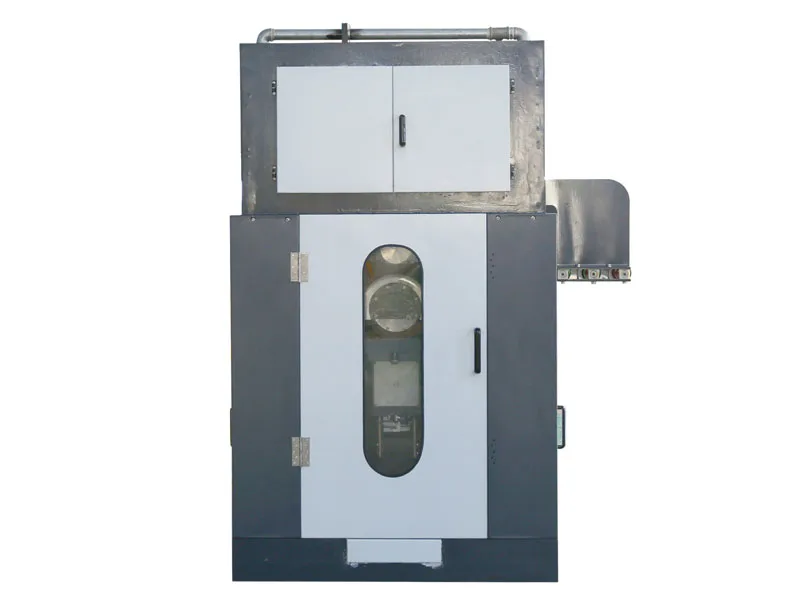
The machine carries stainless steel plate through the buffing station on a rigid bed, finishing to a No.4 satin finish. Buffing stations follow the grinding heads, using compound-loaded wheels to bring out the No.4 satin. No.4 is the directional satin finish specified for elevator cabs, kitchen equipment and architectural cladding.
Why the Rigid Bed Matters
A rigid bed is not a structural detail — it is what keeps the plate flat while the wheels apply pressure. Plate that flexes under buffing pressure produces gloss variation across the panel, and that variation is permanent. On a rigid bed the wheel contact angle stays constant, which is why automated buffing reaches a consistency hand work cannot.
How It Works
- Loading and clamping — plate positioned on the bed with edge protection so corners are not marked.
- Grinding stage — abrasive belts remove scale and establish the grain.
- Buffing stage — compound-loaded wheels follow the grinding heads and bring out the No.4 satin.
- Cleaning and drying — compound residue removed before inspection or lamination.
- Unloading — plate moved to film lamination or packing.
Line speed is set at 6–20 m/min depending on the finish required. Speed is a real constraint, not just a productivity number: raising it increases heat in the buffing stage, and heat is what makes compound glaze and dull the finish.
Features
- Rigid bed construction — keeps the workpiece flat under buffing pressure, which is what makes gloss repeatable
- Adjustable brush pressure and conveyor speed — gloss level and throughput tuned independently
- PLC control with recipe storage — parameters held per material grade and finish
- Wet buffing option — keeps compound workable, controls heat on long runs
- Emergency stop safety — conveyor reverse on emergency stop, and safety switches throughout
- Stainless internal frame — resists corrosion in a wet environment
Typical Operating Conditions
- Plate thickness — 0.4–4.0 mm
- Plate width — 1250 mm
- Sheet length — up to 6000 mm
- Line speed — 6–20 m/min
- Total power — 150 kW typical
Common Defects and How to Prevent Them
- Gloss banding across the panel — plate flexing, or bed wear. Check bed flatness and support rollers.
- Compound glazing — heat; reduce speed and confirm wet delivery reaches the nip.
- Edge marking — seating or edge protection worn; check location pins.
- Uneven finish between batches — brush pressure adjusted by hand each run instead of recalled from recipe.
Typical Applications
Elevator cabs and door panels, commercial kitchen and food service equipment, architectural cladding, home appliances and metal furniture.
Packing & Delivery
Foam edge protection, transparent film wrapping, iron rope securing in container. Section testing before shipment with engineers responsible for their section through dispatch.
FAQ
What support comes after delivery?
Commissioning with your material, operator training on operation and parameter setup, spare parts supply and remote technical support.
What grades of stainless steel can this buffing machine handle?
200 and 300 series including 201, 304 and 316, plus 430. Compound and brush profile is set for your grade when the line is built.
Can it also produce hairline and SB?
Yes. The finish is determined by grit, compound and active stages. Multi-head configurations run No.4, hairline and SB from the same machine.