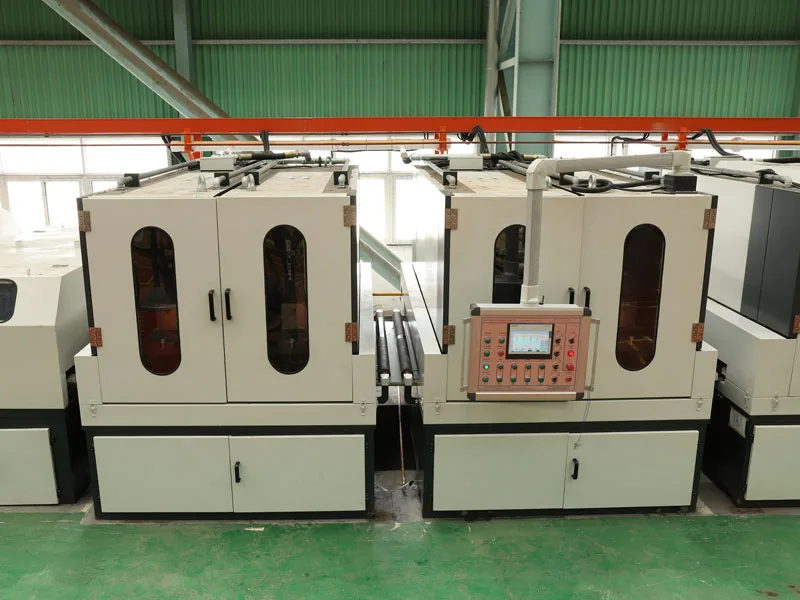
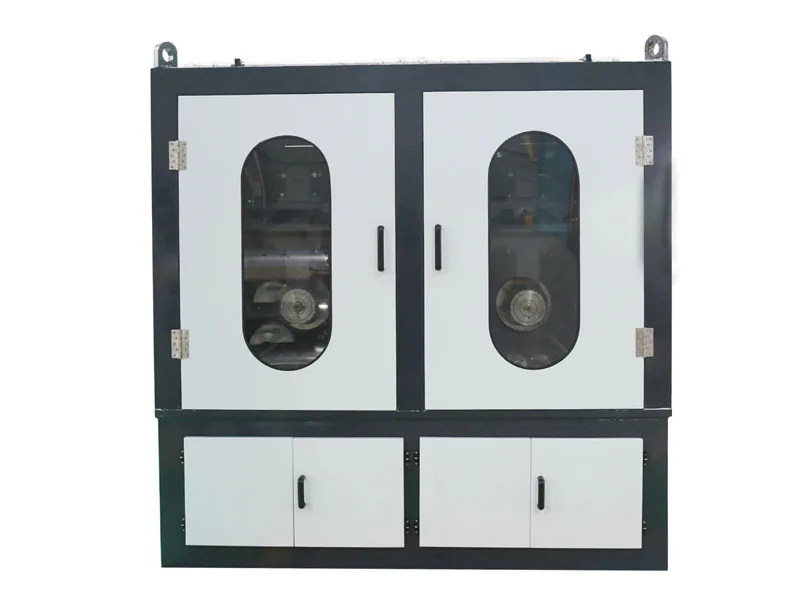
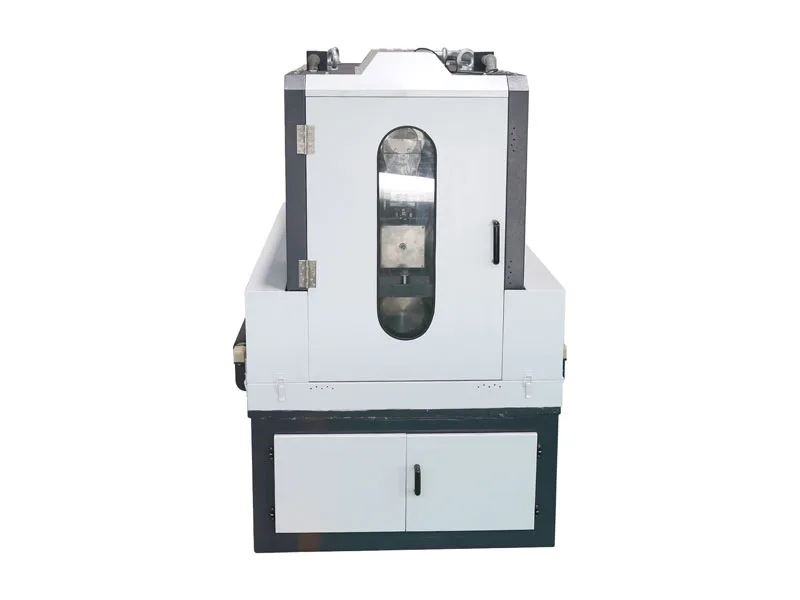
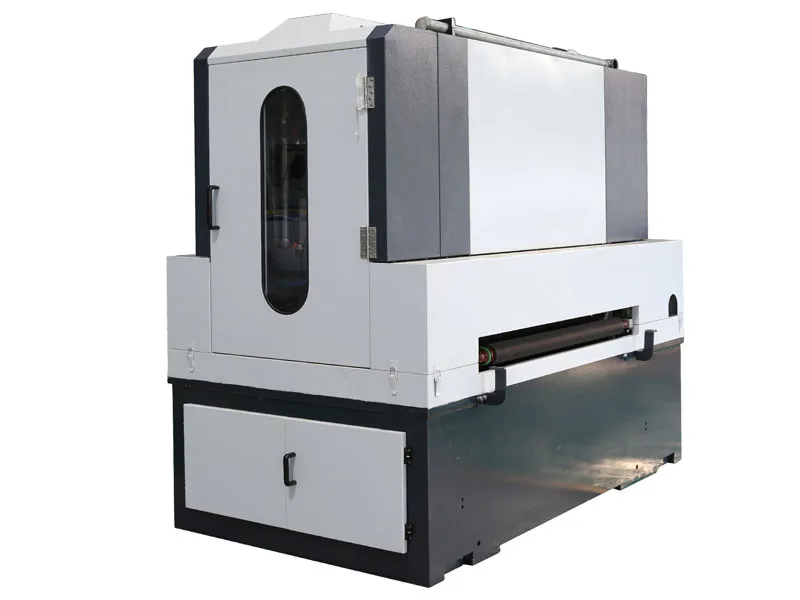
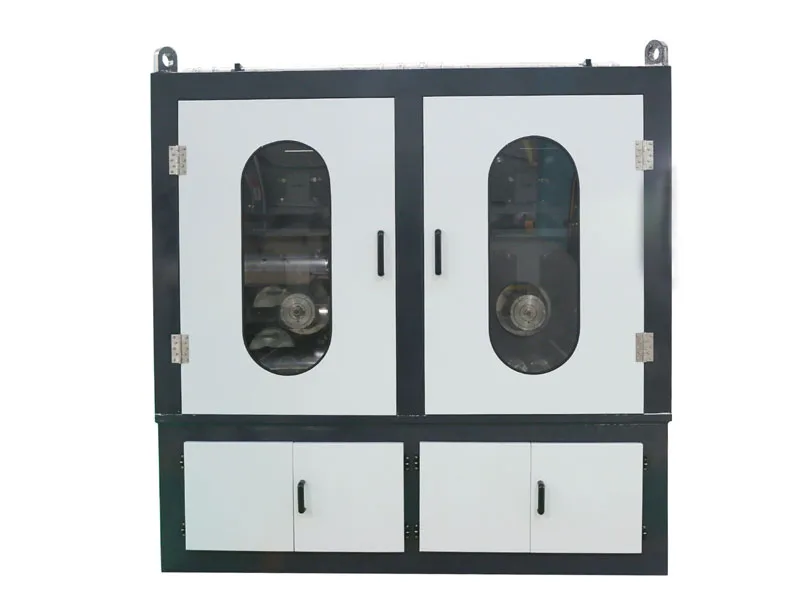
Sheet-to-sheet polishing lines process cut lengths one piece at a time. Each sheet is fed in flat, carried through a sequence of abrasive and buffing heads, and delivered at the far end ready for inspection and film. It is the configuration most job shops and service centres buy first, because it accepts mixed sizes and short runs without a changeover.
How the sheet is carried, and why it decides your thickness range
The transport method sets the practical lower limit on sheet thickness. Roller-pinch drives grip the sheet between rubber-coated rollers and are simple and robust, but thin gauge will buckle between the pinch points. Vacuum-belt tables hold the sheet flat across its whole area and are the standard choice once you go below roughly 0.6 mm.
- Roller transport. Best above about 0.8 mm. Tolerant of oil and swarf, easy to maintain, handles heavy plate.
- Vacuum belt. Required for thin gauge and for any finish where a roller mark would be visible. Needs clean sheet and regular belt tracking checks.
- Edge guidance. On wide sheet the head pressure pushes material sideways; without side guides you get tapered finish across the width and edge drop-off.
Choosing the head sequence
A sheet polishing line is a chain of stages, and the finish you get is decided by the weakest link rather than the finest one. Coarse stages remove damage; fine stages remove the marks left by the coarse ones. Compressing the sequence does not save time — it produces a surface that looks acceptable under workshop lighting and fails the moment panels are hung next to each other.
- No.4 (satin). A directional brushed finish. The most forgiving of the three and the standard for architectural and appliance work.
- Hairline (HL). A finer, longer, more continuous grain than No.4. Less tolerant of abrasive variation, so belt batch consistency matters.
- Vibration / Scotch-Brite (SB). A non-directional matte finish. Reproducibility depends on consistent media pressure and media life tracking.
Where sheet lines beat coil lines
Continuous coil processing wins on throughput, but sheet-to-sheet wins everywhere else that matters to a smaller operation. You can change grade, thickness and finish between pieces. A single rejected sheet costs one sheet, not a whole coil. You can process material you bought already cut, and you can handle plate far too thick to coil.
What to tell us before you ask for a quote
Four numbers decide the machine: the sheet thickness range, the maximum sheet width, the finish you need, and the metres per minute you have to hold. Add the grade mix — 201, 304, 316L and 430 do not polish identically, and a line set up for 430 will not hold the same result on 316L without adjustment.