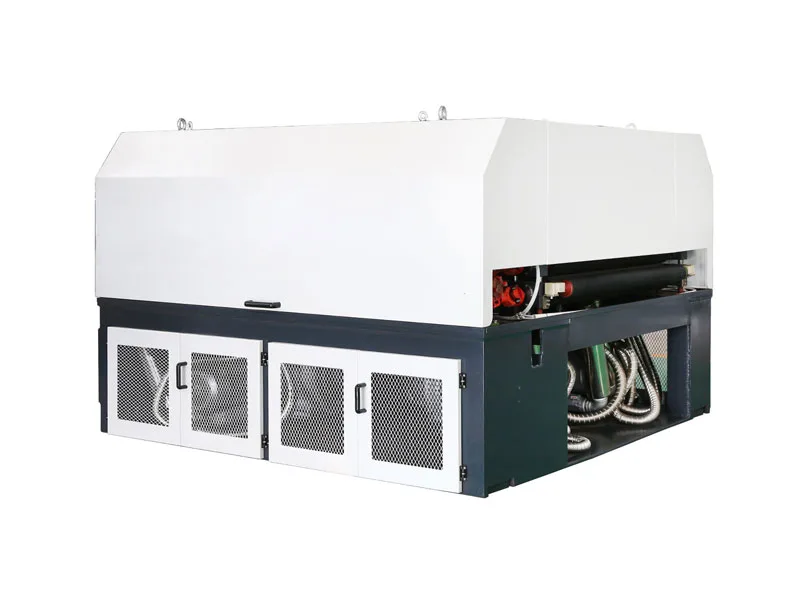
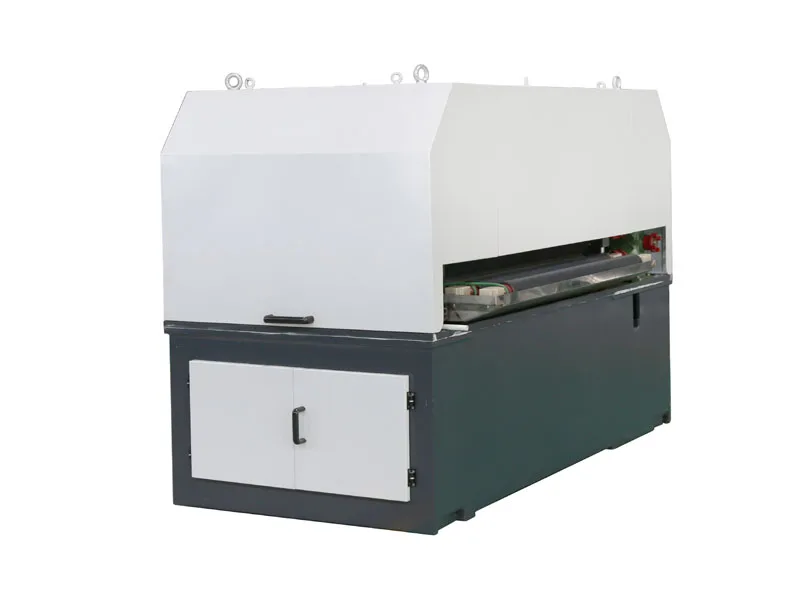
Buffing is the step that turns a fine satin into a reflective surface. A soft wheel running at high surface speed carries a fine compound; the compound does the cutting, not the wheel. Done correctly the surface gains depth and clarity. Done slightly wrong it gains haze, orange peel, or a faint ghost of the grain that was supposed to be gone.
Abrasive belt stage, then buffing wheel stage
A sheet buffing system is normally two machines in one frame. The abrasive belt section brings the sheet up to a uniform fine satin — the buffing section cannot fix a surface that is not already uniform, it only changes its reflectivity. The wheel section then does the final work.
- Belt section. Establishes the base. Its output quality is the ceiling on your final result.
- Wheel section. Usually a set of wheels on a common shaft or individual oscillating heads, running a progressive compound sequence from cutting compound to finishing compound.
Wheel, speed and compound
Wheel selection is a trade between cut rate and surface quality. Harder, denser wheels cut faster and leave a slightly coarser surface. Softer wheels finish finer but generate more heat because they conform more and run longer in contact.
- Sisal and treated cloth. Cutting wheels, used first, more aggressive.
- Cotton and flannel. Finishing wheels, softer, used for the final clarity pass.
- Surface speed. Too low and you burnish without cutting; too high and you overheat the surface. The useful band is narrower than most operators expect.
- Compound feed. Under-fed and the wheel glazes and burns; over-fed and you get smeared residue that shows as staining days later.
Heat is the enemy
Stainless steel has poor thermal conductivity, so heat stays where it is generated. Overheating a buffed surface produces a bluish or straw discolouration that no amount of further buffing removes — the only fix is to grind back and start again. Keeping the surface cool means correct speed, correct pressure, sharp compound and, on longer lines, forced cooling between heads.
Reading a mirror finish
Three defects account for nearly every rejected mirror panel, and each points at a different cause:
- Haze or milkiness. Compound residue not cleaned off, or the surface was taken to mirror before the base was truly uniform.
- Orange peel. Buffing pressure too high, or the base surface was not flat.
- Ghost grain. The underlying abrasive pattern still there. The sequence was compressed — a grinding problem, not a buffing one.
Single machine or full line
A buffing machine produces mirror finish on sheet that arrives already prepared. A full super mirror line includes the grinding and intermediate polishing stages needed to prepare it. If your incoming material is already a consistent fine satin, the buffing machine alone is the right purchase. If you are starting from mill finish or from mixed incoming condition, you need the full line — buying only the buffing stage and hoping the material will be good enough is the most common expensive mistake in this category.