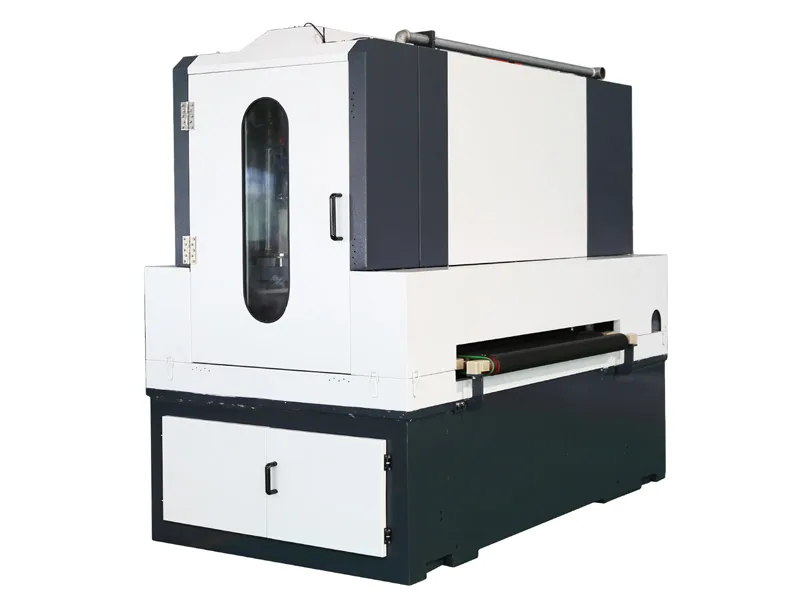
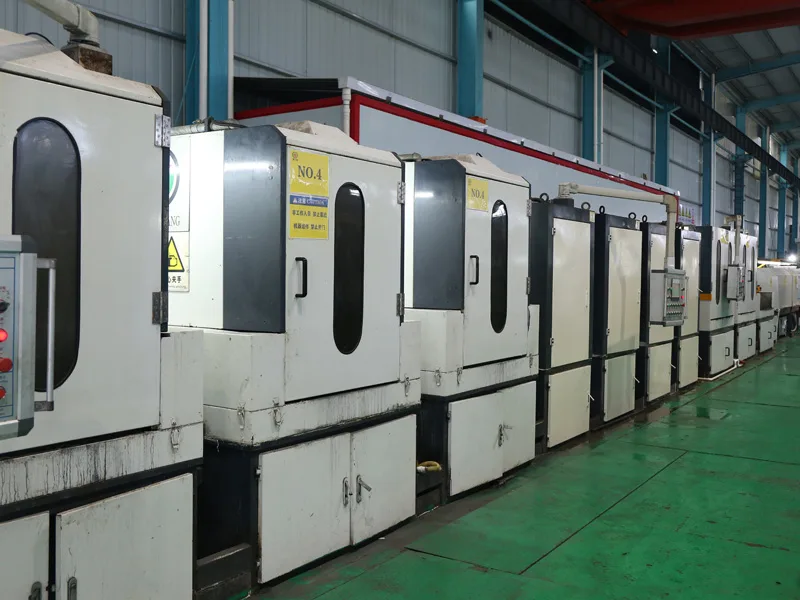
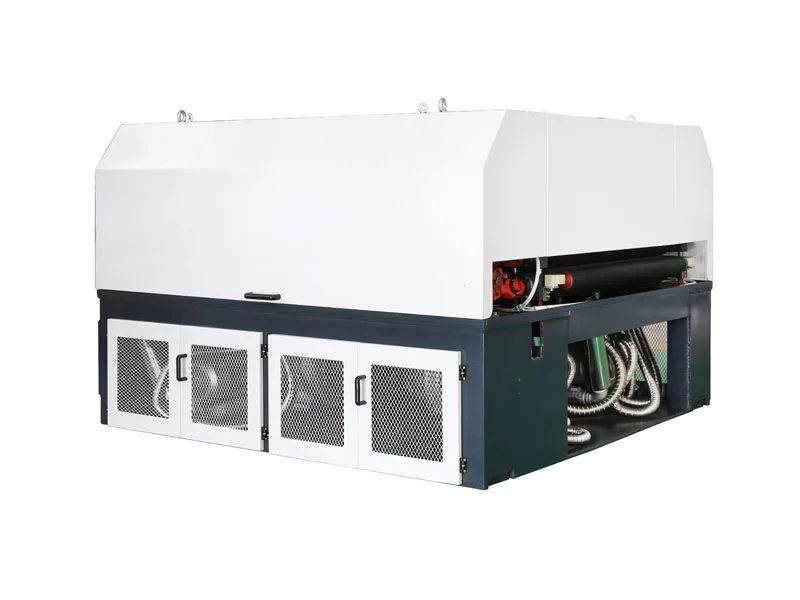
Coil buffing takes strip to a reflective finish — 4K, 6K or 8K — in continuous duty. It is the hardest of the coil processes and the one with the fewest suppliers who can hold it in production rather than in demonstration. The reason is simple: everything that makes sheet buffing sensitive, coil running makes worse.
Why coil mirror is harder than sheet mirror
- Tension variation never stops. On sheet, each piece is held flat and independent. On coil, tension fluctuates continuously as diameters change and as the strip passes each head. Variable pressure under a buffing wheel means variable reflectivity.
- Heat has nowhere to go. Continuous buffing generates heat faster than any inter-pass cooling can remove it, and stainless holds heat where it is generated. Overheating shows as discolouration that cannot be buffed out.
- The edges are always different. Airflow, coolant and contact pressure all differ at the strip edge, so the edges run hotter and finish differently from the centre.
- You cannot re-run a piece. On sheet, one bad piece is re-worked. On coil, a bad section is either sold at a lower grade or scrapped by the metre.
Head configuration
Coil buffing normally uses rotary disc heads or oscillating wheel heads rather than a fixed wheel set. The motion spreads contact, evens out wear and prevents the directional pattern a fixed wheel leaves. Heads are arranged in a progressive compound sequence — cutting compound first, finishing compound last — with washing and drying between stages and before lamination.
Cleaning, drying and film on-line
On a coil mirror line these are not optional extras. Compound residue left on the surface will bloom into visible staining within days of packing. The wash section has to remove it completely, the drying section has to leave no water spotting, and film has to be applied before the strip reaches the recoiler — because a mirror surface recoiled against itself is damaged by the contact. If a quoted line treats washing or laminating as optional, that is the thing to question first.
Who should buy this
A coil buffing line is a capital commitment justified by volume: architectural cladding producers, elevator and escalator panel suppliers, appliance makers, and service centres supplying mirror coil as a standard product. If your mirror requirement is intermittent, or your widths and grades change frequently, sheet-based 8K processing will give you better yield and far less risk. We will tell you which one fits your order book if you share it with us.
What we need from you
Strip width and thickness range, coil weight and diameters, target finish grade, line speed, and — importantly — the condition of the strip arriving at the buffing line. Coil buffing cannot rescue a poor base. If the incoming strip is not already at a uniform fine finish, the grinding and intermediate polishing stages have to be specified as part of the same line.