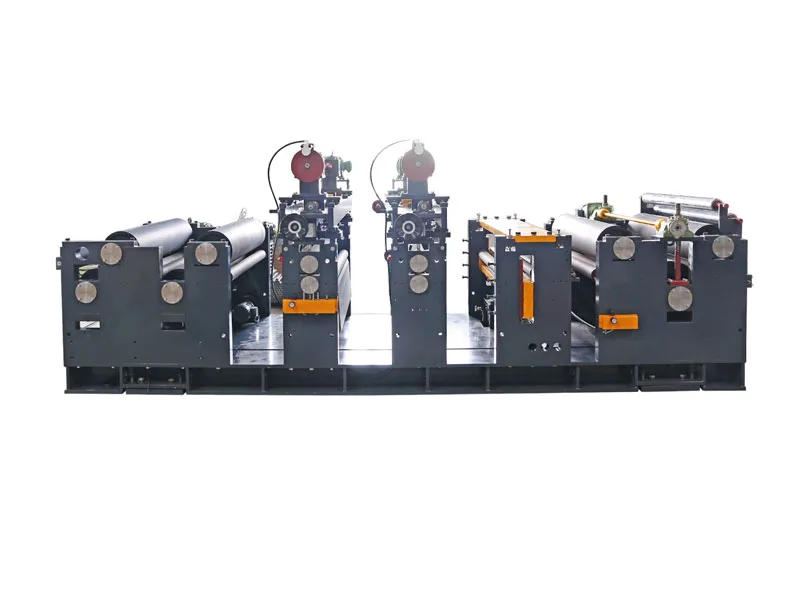
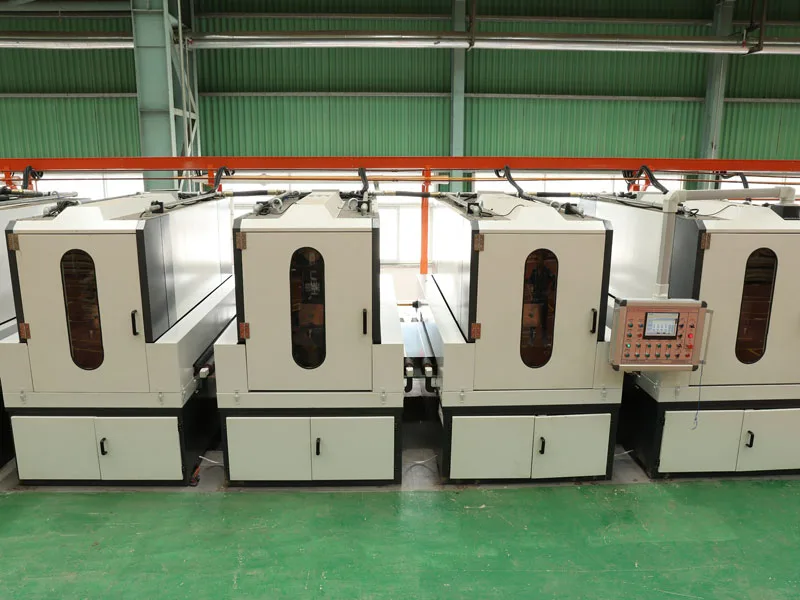
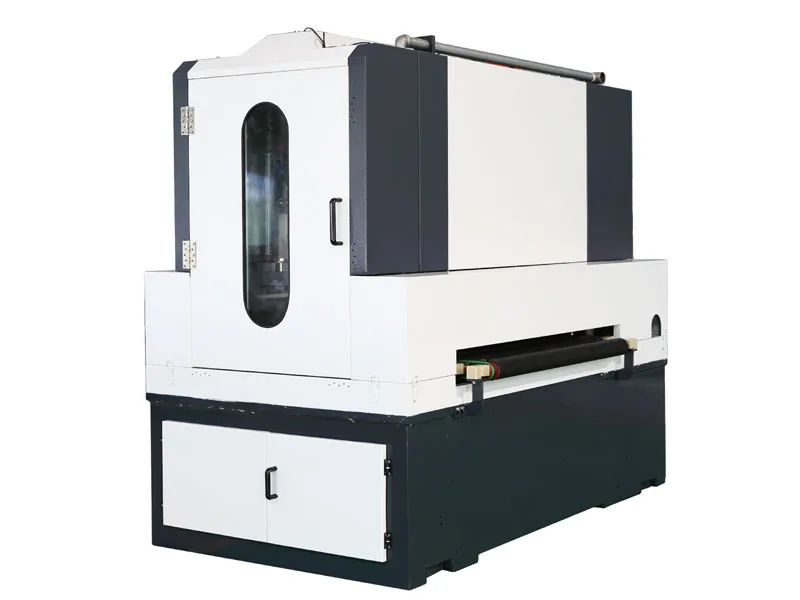
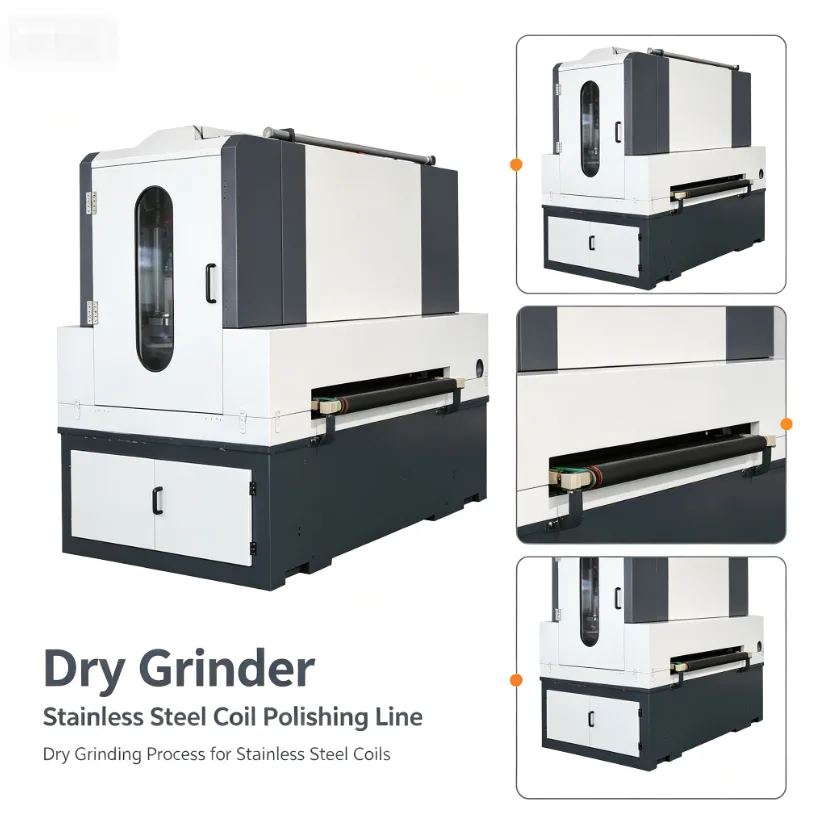
Continuous coil grinding prepares strip the same way a wide-belt grinder prepares sheet — remove mill scale and damage, establish flatness, lay down a uniform scratch pattern — but it does it at line speed, without stopping, across the full length of a coil. Wet media is standard: coolant, swarf flushing and dust capture in one system.
What continuous running changes
On a sheet grinder, every piece is a fresh setup. On a coil line the heads run for hours in steady state, and the process problems are different ones:
- Belt life becomes a scheduling problem. A belt that lasts ninety minutes on sheet may last a quarter of that in continuous duty. You need to know the number, because an unplanned belt change mid-coil means either stopping the line or running a section at deteriorating quality.
- Heat accumulates. Continuous grinding puts far more total energy into the strip and the machine. Coolant capacity and temperature control are sized for steady state, not for averages.
- Edge condition dominates. Mill edge damage runs the whole length of the coil. Trim or accept it, but decide before you build.
No.4 and Scotch-Brite on strip
No.4 on coil is a grind-and-refine sequence to a specified grit, held consistently across the width. The failure mode is drift: as belts wear, the finish gradually changes down the length of the coil, and the difference between the start and the end of a run is visible once the material is cut and hung. Compensation is either automatic pressure correction or a conservative belt change interval.
Scotch-Brite or vibration finish on coil uses non-woven abrasive media rather than a sequence of grits. It is more tolerant of incoming variation and produces a uniform matte that hides minor substrate defects — which is why it is widely specified for cladding and for surfaces that will see handling.
Speed matching
A coil grinding line rarely runs alone. It feeds a polishing or buffing line, or a cut-to-length operation, and its throughput has to match what follows. The mistake to avoid is specifying the grinder to its own maximum speed rather than to the line speed the downstream process can actually hold. The grinder will then spend its life running below capability, and the money spent on that extra capacity is wasted.
Water treatment
Wet grinding needs filtration and recirculation sized to the duty, and the system is part of the machine, not an accessory. Stainless swarf in suspension is abrasive to pumps and nozzles, and coolant allowed to go septic will start marking the strip. We size filtration with the line and specify the maintenance intervals with it, because this is the subsystem most often under-specified and most expensive to retrofit.