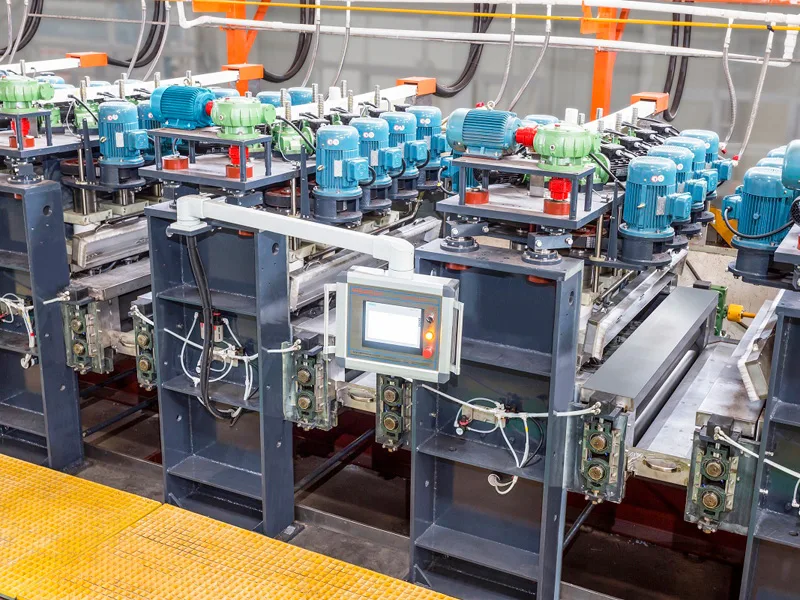
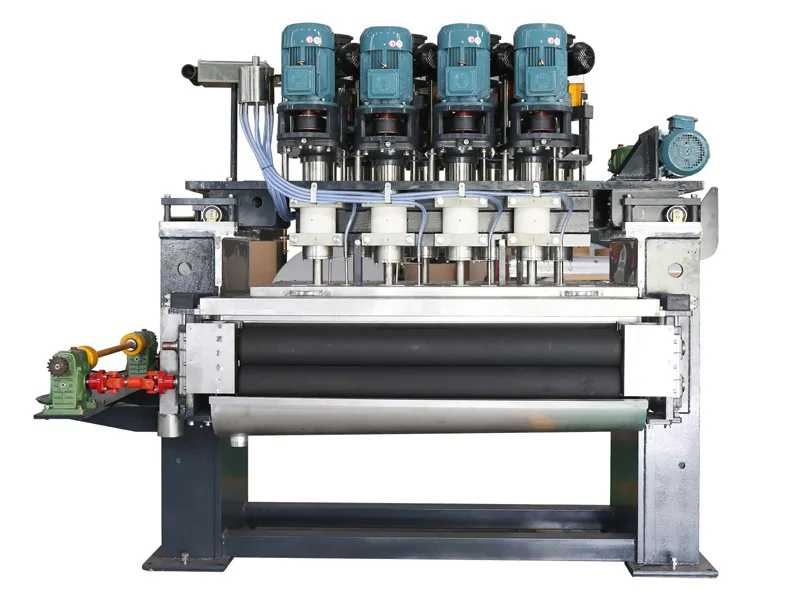
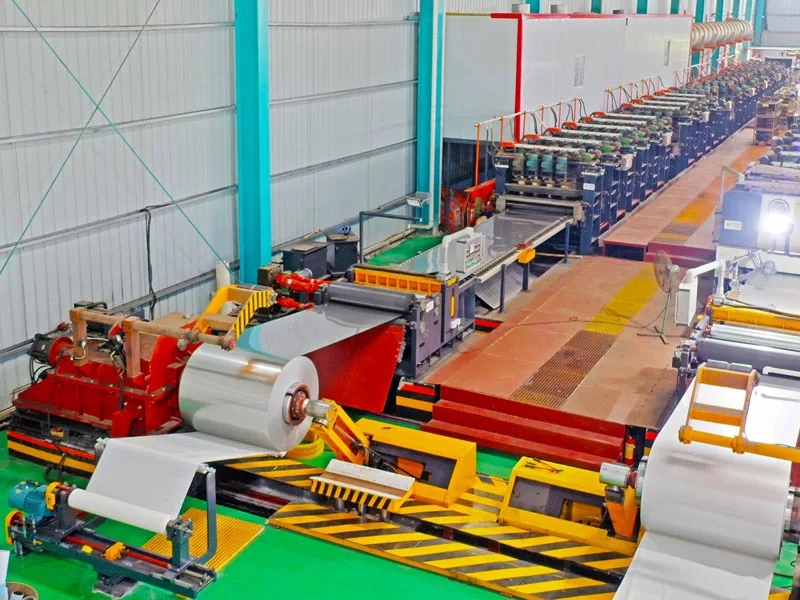
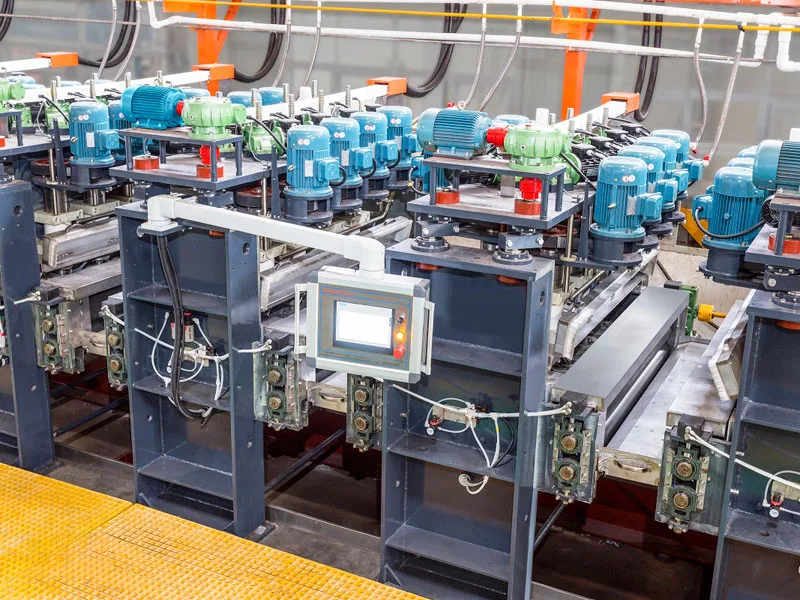
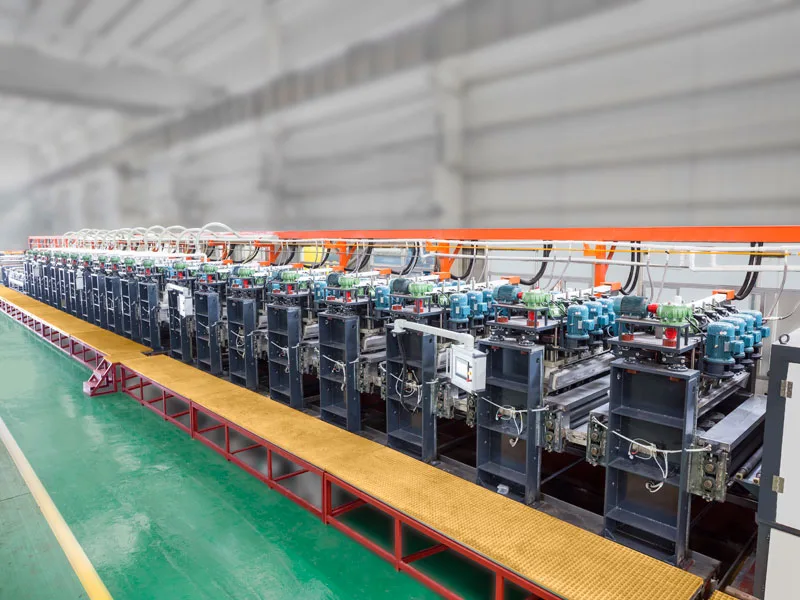
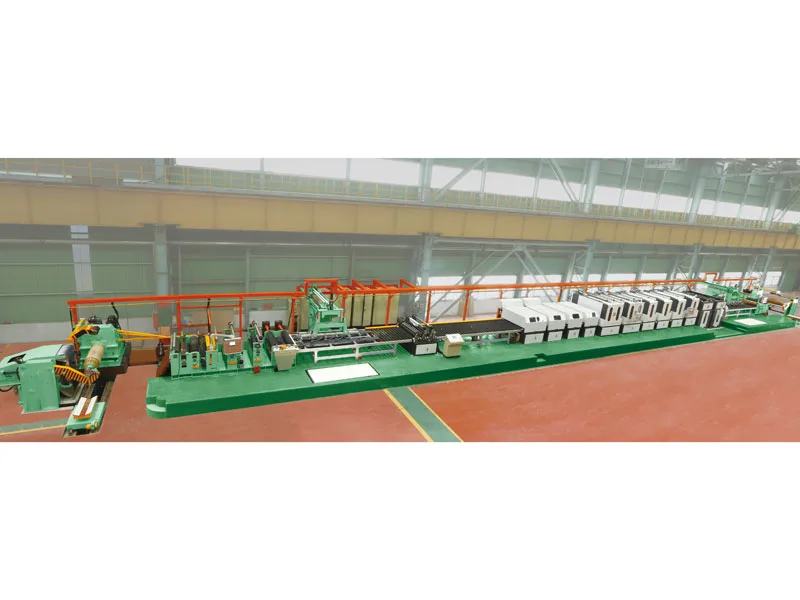
A coil-to-coil 8K line is the most demanding machine in this catalogue. It grinds, polishes through progressive stages, buffs to mirror clarity, washes, dries and laminates continuously — on strip that never stops moving, never gets inspected individually, and cannot be re-worked. Everything about the line is designed around the fact that you get one pass.
The threshold question
Before talking about configuration, answer one honestly: is your incoming strip consistent? Coil 8K is achievable when the substrate, the gauge and the incoming surface condition are controlled. It is not achievable when any of those varies, because the process has no way to adapt mid-run to material that changed. Buyers who get disappointing results from a perfectly good line almost always have an incoming material problem, not a machine problem.
What the line does
- Grinding. Removes mill scale and defects, establishes flatness across the full strip width.
- Intermediate polishing. Progressive abrasive stages. The number is set by incoming condition, and this is where most of the line length comes from.
- Rotary disc buffing. Multiple heads in sequence, cutting compound through to finishing compound. Rotary motion is what prevents a directional pattern on continuous strip.
- Washing and drying. Complete compound removal, no water spotting. Non-negotiable at 8K.
- Film lamination. Applied before recoiling, because mirror strip damages itself under coil tension.
The three things that break coil 8K
- Tension stability. Reflectivity is a direct function of contact pressure. Tension that varies by even a small percentage produces visible banding down the coil length.
- Thermal control. Continuous buffing puts sustained heat into strip that conducts it poorly. Cooling capacity has to be sized for steady state under full load, not for commissioning conditions.
- Cleanliness. One particle of swarf carried into a buffing head scores the strip for metres. Filtration, washing and the enclosure standard are process equipment, not housekeeping.
Inspection while running
Because you cannot re-run the material, the line has to tell you what it is producing while it produces it. On-line gloss and defect detection lets an operator correct drift before a coil is ruined rather than discovering it at the recoiler. We integrate it as standard on these lines and agree with you what the acceptance threshold is before commissioning, so the line is validated against a number both sides signed off.
Delivery, installation, commissioning
We supply these as complete turnkey systems and commission them on your material at your site, with operator training included. Commissioning runs on production coil, not on sample lengths — the point of commissioning is to find out whether the line holds 8K on what you actually buy, while we are still there to fix it.