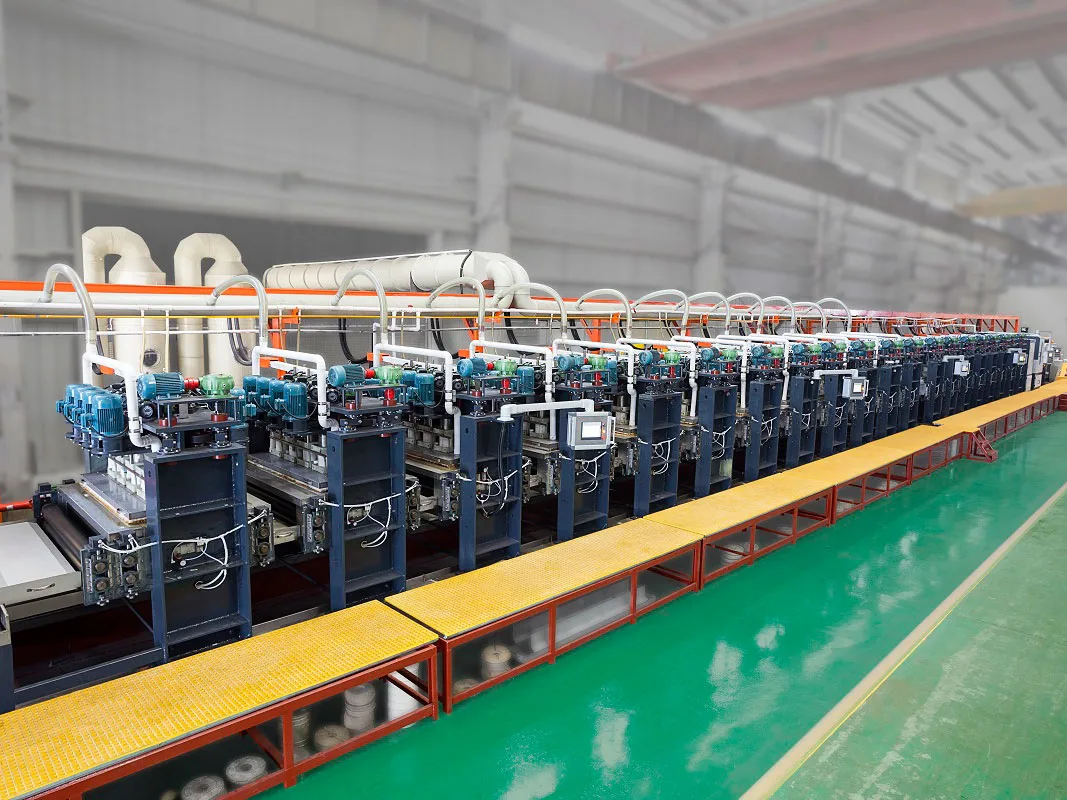
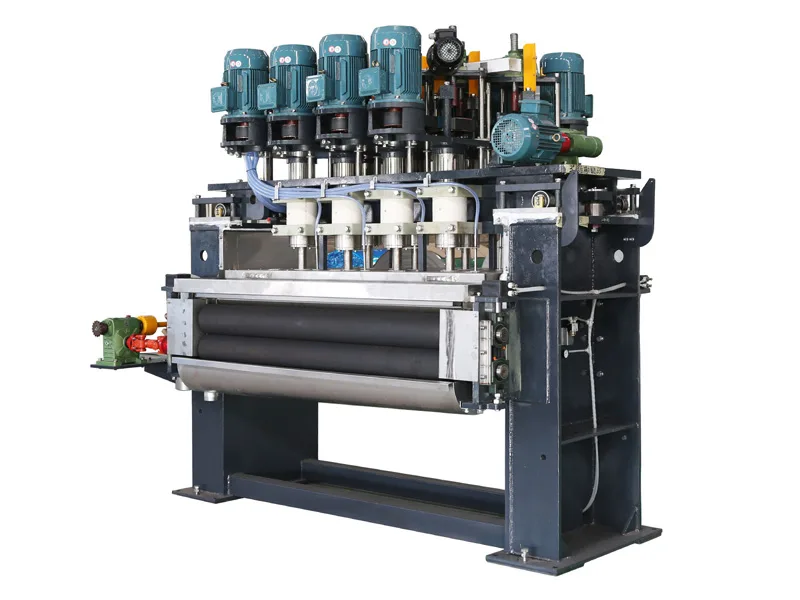
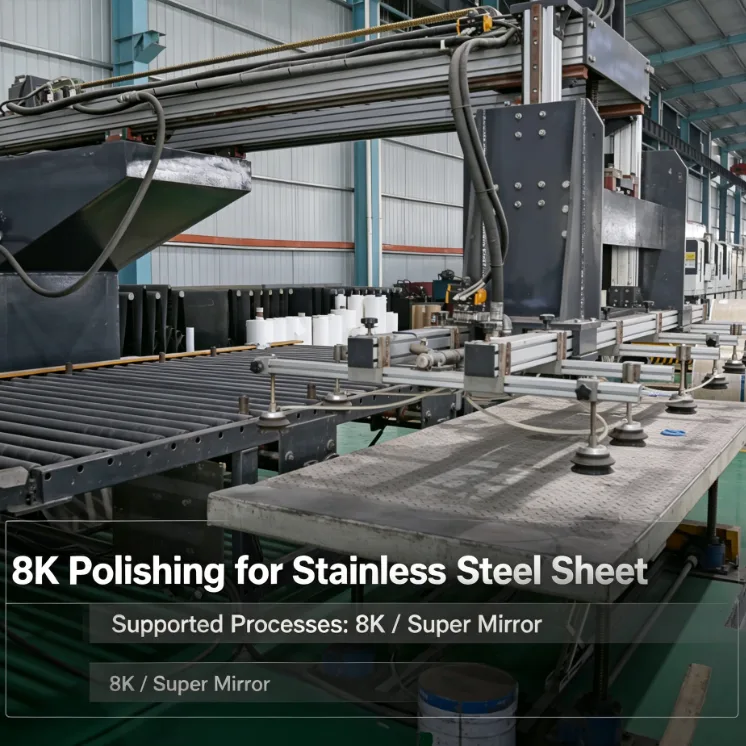
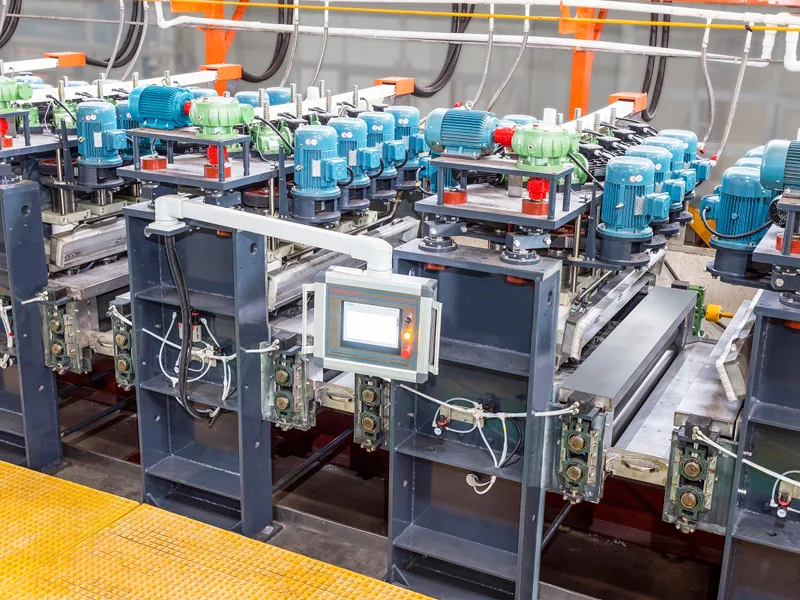
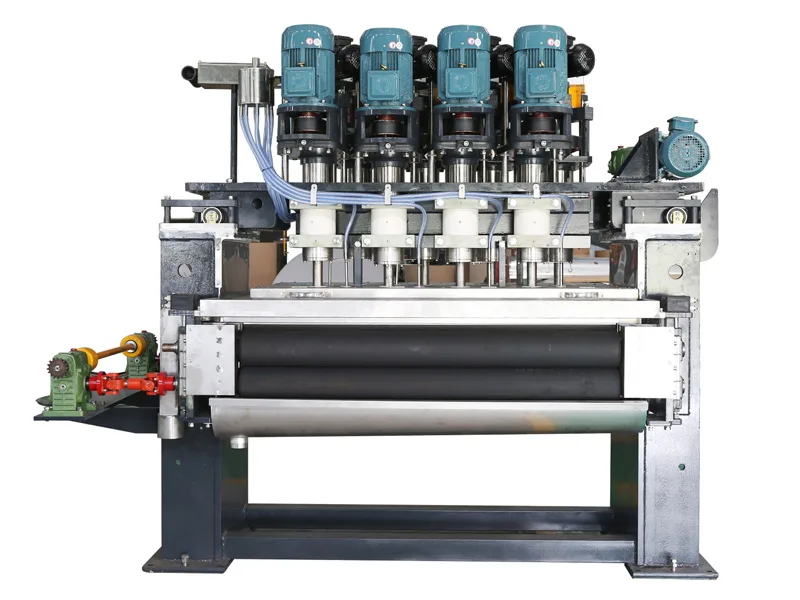
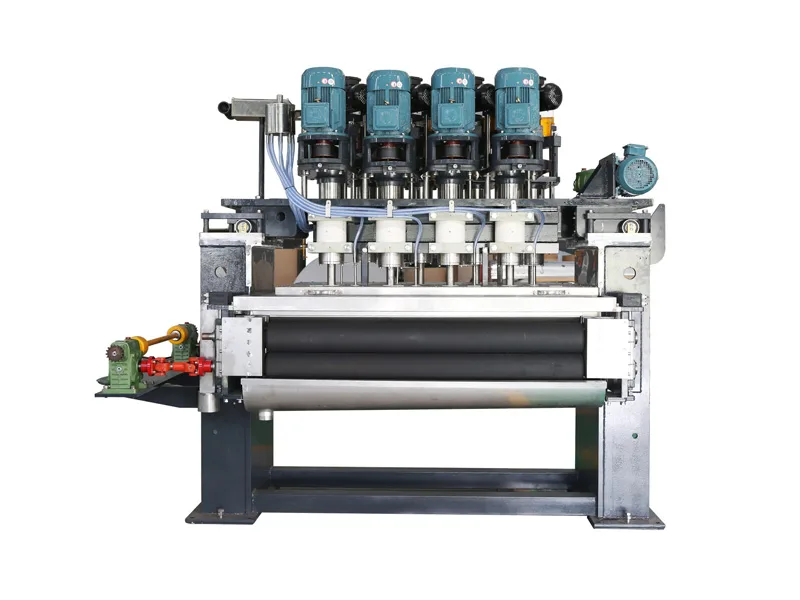
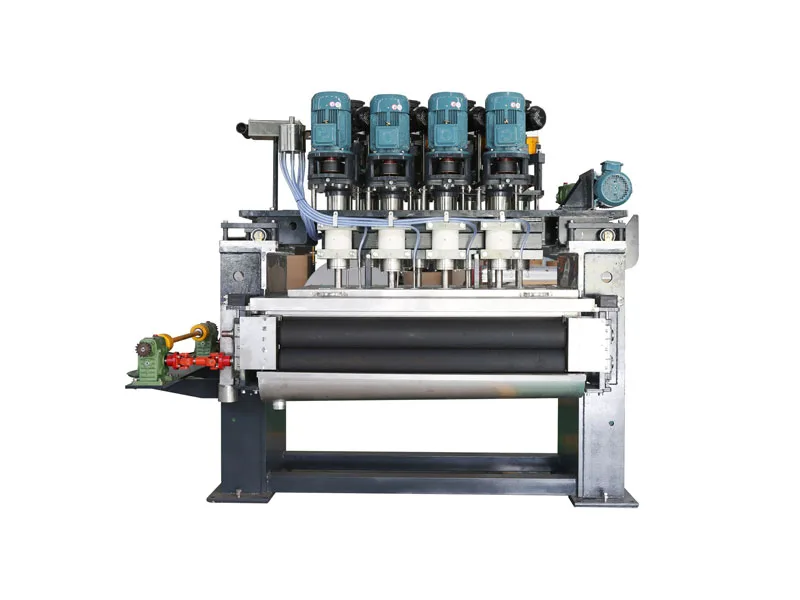
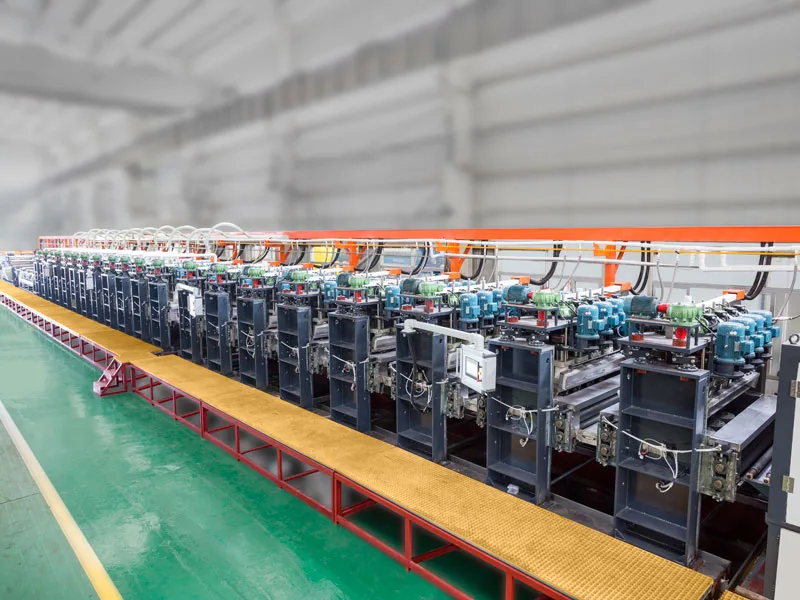
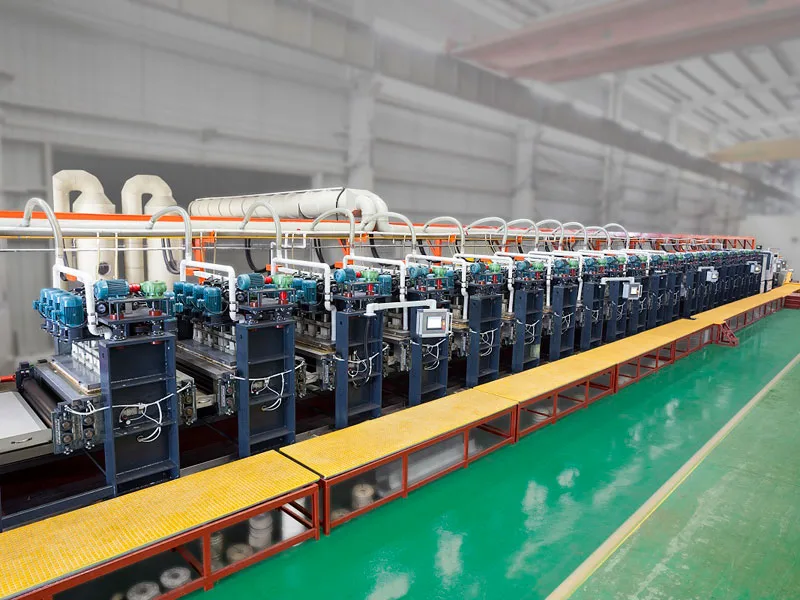
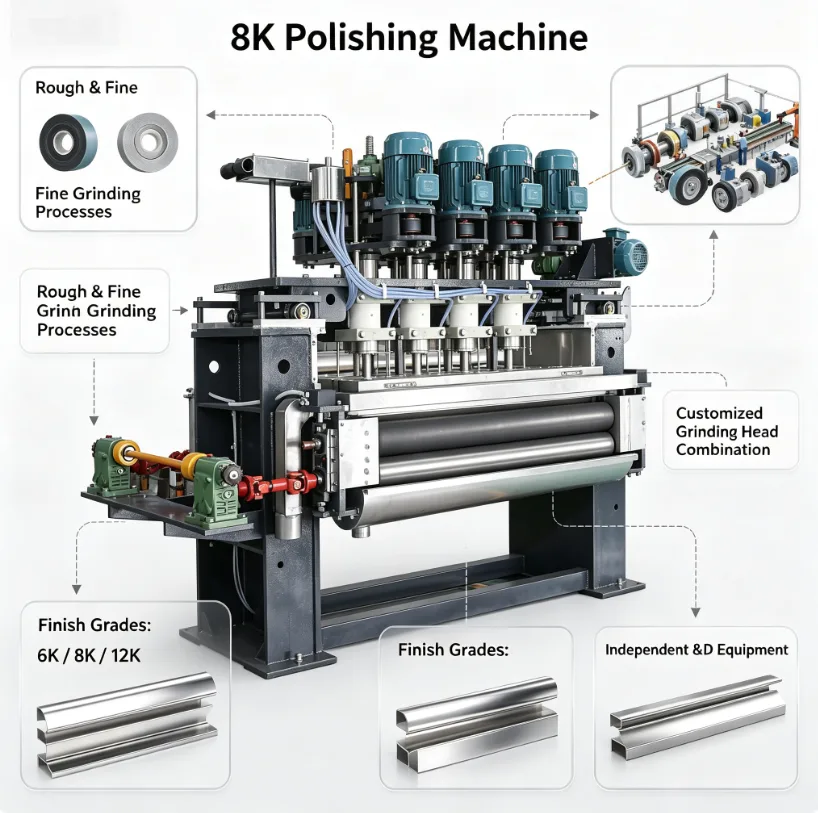
An 8K super mirror polishing machine produces No.8 / 8K finish — the highest reflective standard in stainless steel surface finishing. The surface reads as glass: no visible scratches, no oxidation tint, no orange-peel texture, no uneven gloss. It is used where the surface itself is the product.
How the 8K Process Works
8K is not a buffing step, it is a staged grinding progression that ends in buffing. Skipping any stage is the most common reason a mirror finish comes out cloudy.
- Step 1 — cut and refine — progressive belts remove scale and bring the surface flat. Grit steps are never skipped; every stage must leave a fully uniform scratch pattern before the next begins.
- Step 2 — pre-polishing — finer belts, typically up to around 600 grit, prepare the surface for reflection.
- Step 3 — buffing — felt drum or buffing wheel with polish paste produces the mirror.
- Step 4 — cleaning — closed-loop water washing removes all residue.
- Step 5 — drying — warm air or air knife, because a completely dry surface is required before lamination or packing.
Panels are fed individually on this configuration, so 8K finish can be held on small batches as easily as on long production runs.
Key Features
- Closed-loop water recycling — polishing wastewater is filtered, purified and reused, with zero sewage discharge. No dust pollution, low energy use, and it meets EU environmental expectations for green production.
- Constant-temperature wet grinding — protects high-hardness materials including 316, delivering the mirror finish without sheet deformation or thermal damage.
- Multi-stage head layout — enough heads for the full grit progression without combining steps.
- PLC control with recipe storage — parameters held per grade and finish.
- Custom width and configuration — working width, head count, water circulation power and intelligent functions specified to your sheet.
Typical Operating Conditions
- Grades — 200 / 300 / 400 series; 201, 304, 316, 430, duplex
- Thickness — 0.3–4.0 mm
- Width — 600–1550 mm; customised available
- Panel size — 1250×2500 mm and 1550×3000 mm typical
- Line speed — 5–20 m/min depending on stage
Common Defects and How to Prevent Them
- Cloudy or hazy mirror — grit progression skipped or started too coarse. A deep scratch left at any stage emerges as a bright unpolished scar once the buffing wheel passes.
- Orange-peel texture — final buffing stage too coarse, or compound not properly broken in.
- Oxidation tint — heat generated during grinding; constant-temperature wet grinding prevents it.
- Water spots — drying stage insufficient. The surface must be completely dry before protective film is applied.
- Sheet deformation on 316 — heat and pressure; specify constant-temperature wet mode for high-hardness material.
Typical Applications
Feature walls, elevator cabins, reflective ceiling panels, decorative signage, boat and marine hardware, medical and cleanroom fittings, high-end cookware and appliance trim.
Packing & Delivery
Section-by-section testing with real stainless plate verification before shipment. Foam edge protection, transparent film wrapping and iron rope securing in container.
FAQ
Is the wet grinding process environmentally friendly?
Yes. The system is fully closed-loop: polishing wastewater is filtered, purified and reused, with zero sewage discharge. There is no dust pollution and energy consumption is low.
Can it process 316 stainless steel?
Yes. The CNC system adjusts grinding pressure and processing speed to material hardness, and constant-temperature wet grinding protects high-hardness 316 while producing the 8K finish without deformation.
Can the machine be customised?
Yes. We customise processing width, grinding group configuration, water circulation power and intelligent functions based on your sheet specification, capacity and local environmental requirements. Send a mirror-finish sample and we can match it.
How is 8K different from a No.8 mirror?
They describe the same reflective standard. No.8 and 8K are used interchangeably in industry; what matters is the process actually reaches the required reflectivity consistently, which is why the full grit progression and wet grinding are specified rather than a single buffing pass.
Matching a model to the stage you are missing
Most buyers arrive here already knowing they need a mirror finish, and not knowing which of these machines they actually have to buy. The answer depends on which stage of the sequence is missing from your line — not on the machine with the most features.
- You have no mirror line yet, and want to start from raw sheet. Begin with the 8K surface grinding machine. It cuts and flattens the surface and produces the uniform scratch pattern that every later stage depends on. Buying a polishing head before this stage exists is the single most common ordering mistake.
- You already grind, and need the reflective surface. The super mirror polishing machine takes a ground surface to mirror in one pass. If both faces of the panel are visible in the finished product, the both-side version handles top and bottom without re-fixturing.
- Your surface is close but hazy. That is a buffing problem, not a grinding problem. The mirror buffing machine works with compound rather than belt and lifts gloss without removing geometry. Re-grinding a surface that only needs buffing removes material you cannot put back.
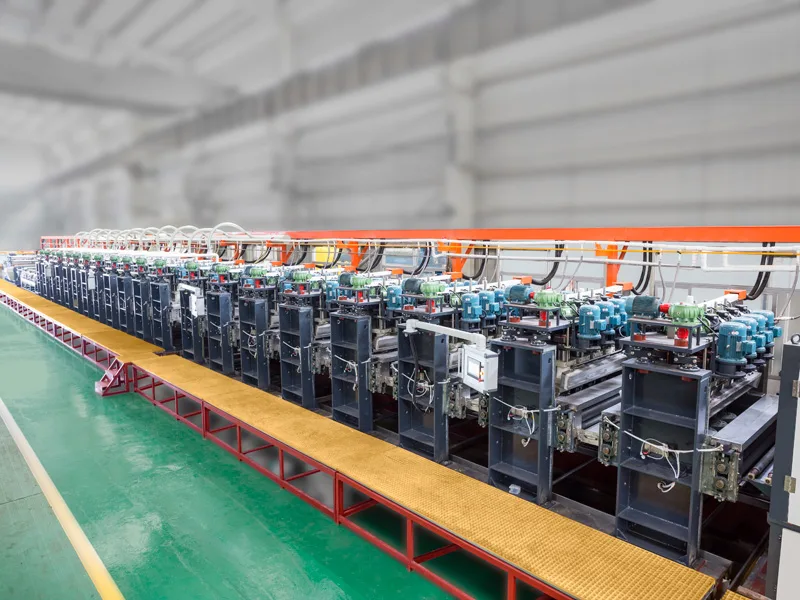
- You want the whole sequence in one line. The automatic 8K polishing line runs grinding, pre-polishing and buffing in sequence with transfer between stages. It costs more and takes more floor space, and it is the right answer when you are finishing at volume rather than job by job.
One thing worth settling before you choose: what Ra the coating supplier will accept. If the panels go to PVD or anti-fingerprint treatment, the mirror has to be specified to a measured roughness, not to a visual standard. A surface that looks perfect in the inspection bay and fails at the coater is a batch-level loss.
Related reading
- What an 8K mirror finish actually is — the surface standard these machines are built to reach.
- Making 8K mirror with wet grinding — why wet processing changes the defect profile.
- Eliminating mirror defects — what each defect points at, and which parameter to check first.
- Daily use and maintenance — the routine that keeps a mirror line repeatable.