
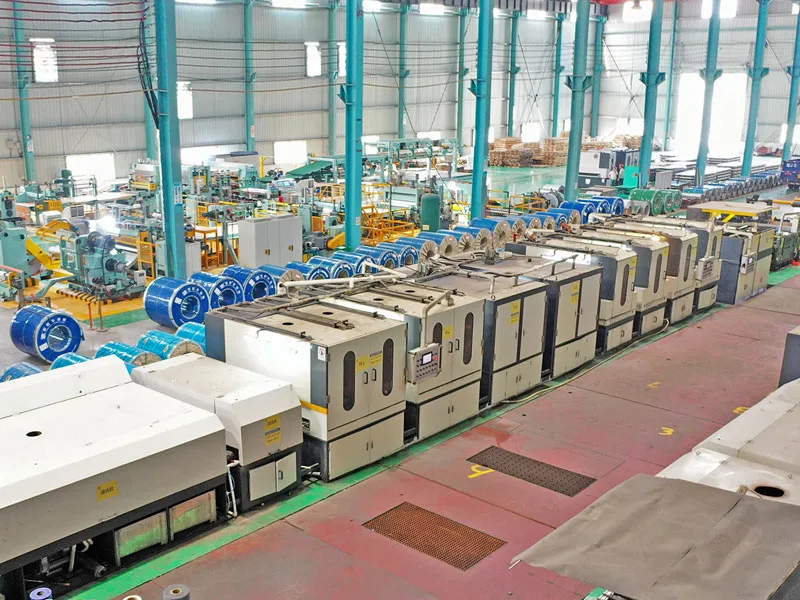
This machine handles stainless steel sheet piece by piece, working the surface up to a No.4 satin finish with no edge marking. The grinding section sets the base surface; what follows only refines it to No.4 satin. No.4 is the directional satin finish specified for elevator cabs, kitchen equipment and architectural cladding.
Working width runs to Depending on the sheet width. The working envelope also covers abrasive belt length at 2620mm, so the surface stays within tolerance across the batch.
What This Machine Does
This grinding machine is configured for No.4 satin finish on stainless steel sheet. The grinding section sets the base surface; what follows only refines it to No.4 satin.
Working width runs to 900,1250,1500mm, , customized available.
This build runs to working width 900,1250,1500mm, , customized available and speed of the line 6-25M/min, with abrasive belt width Depending on the sheet width and sheet size 1250X2500mm 1550X3000mm customized available.
What Sets It Apart
- Abrasive tracking is automatic, which stops belt wander from showing up as an edge defect.
- The machine can be run in either direction, which helps when a panel has to be re-worked.
- Load is spread across the full face of the roll, preventing the ridge that shows as a line in reflected light.
- The frame is stress-relieved before machining, which keeps the working heads in alignment under load.
Where It Is Used
- commercial kitchen equipment and countertops
- shopfitting and display units
- panel manufacturers
- ventilation and duct components
Packing & Delivery
Standard export packing, container shipment, 30 days from deposit. Commissioning and operator training can be arranged after delivery.
FAQ
Can it be reconfigured for a different finish later?
Yes. Changing the abrasive sequence, and the belt or compound grade, moves the machine between finishes on stainless steel sheet. The frame and drive train stay as they are; only the consumables and the stored recipe change.
Is the machine suitable for thin gauge stainless steel sheet?
Within the thickness range listed above, yes. Thin material is supported across its full width through the grinding station, which is what stops it from lifting or marking on the way through.