
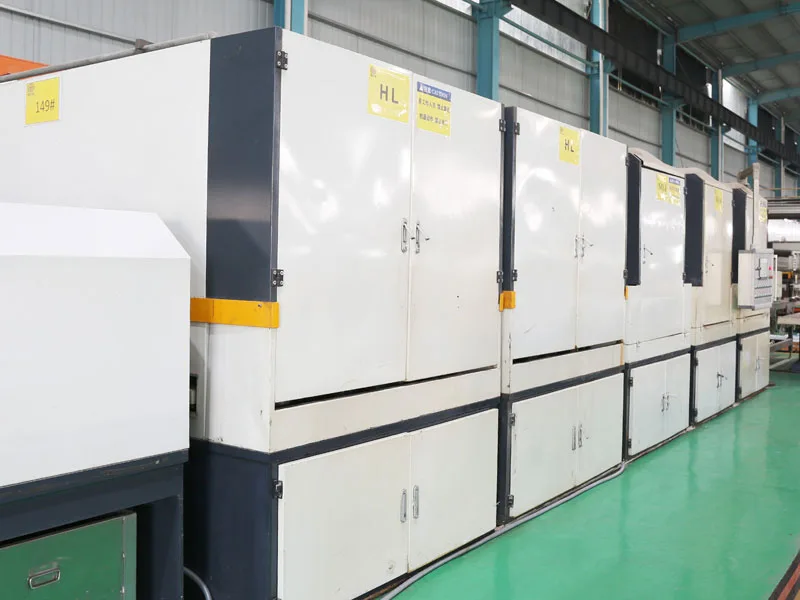
Designed for coil-to-coil operation, the machine brings stainless steel coil up to a uniform No.4 satin finish without intermediate handling. Coated-abrasive belts do the cutting, levelling the surface in defined steps before any finishing station takes over. The result is the familiar brushed satin surface — No.4 — with grain running consistently along the panel.
How It Works
This grinding machine is configured for No.4 satin finish on stainless steel coil. The grinding section sets the base surface; what follows only refines it to No.4 satin.
Features
- Change parts are labelled and stored on the machine, which keeps setup consistent between shifts.
- Oil-type grinding carries the swarf away and keeps the abrasive cool, giving a cleaner surface on long runs.
- The bed is ground flat after welding, which is what keeps thin gauge material from marking.
- The operator sees station load on the panel, so a worn belt is caught before it ruins a panel.
Applications
- commercial kitchen equipment and countertops
- shopfitting and display units
- mills running toll processing
- elevator car panels and lift doors
Packing & Delivery
Shipped in export packing, secured in container. Lead time is 30 days after deposit; commissioning and training are available on site.
FAQ
How is the No.4 satin kept consistent from batch to batch?
Every station holds its own set pressure and speed, and those values are stored as a recipe. Once a grade and gauge are dialled in for No.4 satin, the next run of the same specification is called up rather than set again by hand.
What sets the throughput of this machine?
Throughput follows the number of working stations, the width being processed and how far the surface has to be taken — reaching No.4 satin takes more passes than a coarse grind. The specification table above gives the working speed for this machine.