
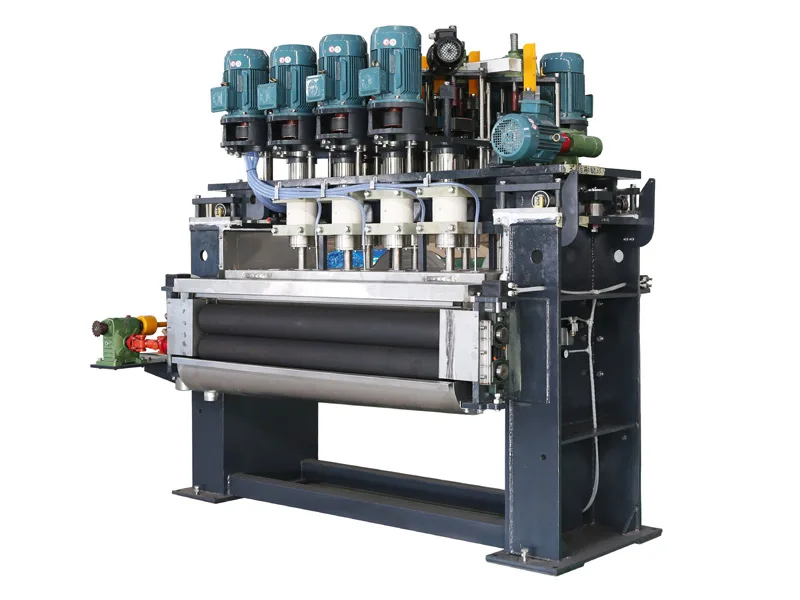
The machine takes stainless steel sheet through a controlled buffing sequence and delivers a uniform No.8 / 8K super mirror finish. The buffing section is what turns a levelled surface into 8K mirror, cutting haze rather than stock. No.8 mirror means the surface reads as glass — the grade used for feature walls, lift cabins and reflective ceilings.
Grades routinely run through it include 430,439,445,304,316,200 series. The working envelope also covers grade of sheet at 430,439,445,304,316,200 series, so the surface stays within tolerance across the batch.
How It Works
This buffing machine is configured for No.8 / 8K super mirror finish on stainless steel sheet. Cloth wheels and compound do the final work, lifting the surface to 8K mirror after the abrasive stations have levelled it.
In the configuration supplied: sheet thickness 0.6~3.0; processing speed 0.5~1.2; sheet width 1250 max; grade of sheet 430,439,445,304,316,200 series.
Machine Features
- Spindle bearings are selected for continuous duty rather than intermittent use.
- Emergency stop and overload protection are wired into every station, not just the main drive.
- Thickness is set by a calibrated scale rather than by feel, so repeat jobs come out the same.
- Abrasive tracking is automatic, which stops belt wander from showing up as an edge defect.
Where It Is Used
- reception and lobby feature panels
- job shops handling mixed batches
- column cladding
- mirror-finish door skins
Packing & Delivery
Export packing for sea freight, 30 days lead time from deposit, and installation supervision with operator training on request.
FAQ
Is the machine suitable for thin gauge stainless steel sheet?
Within the thickness range listed above, yes. Thin material is supported across its full width through the buffing station, which is what stops it from lifting or marking on the way through.
What grades of stainless steel can this buffing machine handle?
The austenitic and ferritic grades used for surface-critical stainless steel sheet work run through it — 304, 316, 430, 439 and 445 among others. The abrasive sequence is matched to the grade, so mixed batches can be run without changing hardware.